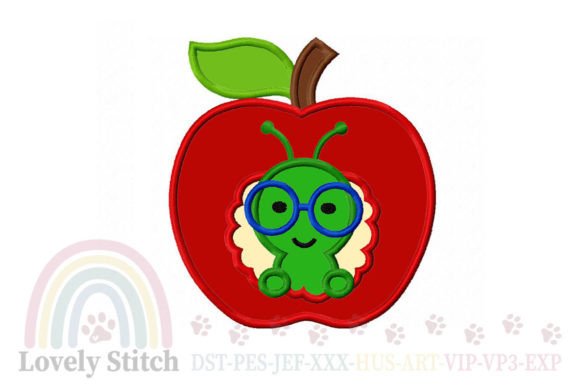
Apple Worm Applique Embroidery
A Playful, Handmade Vibe with Real Business Potential
As an embroidery designer who’s developed hundreds of commercial machine embroidery designs for small businesses—from indie bakeries to local florists and pet boutiques—I approached Apple Worm Applique Embroidery with a dual lens: creative curiosity and production pragmatism. The title alone signals approachability: “apple” evokes freshness, education, and natural charm; “worm” adds gentle whimsy—not cartoonish, but earthy and clever. Paired with the “Back To School” category, it suggests friendly authority, growth, and tactile learning—ideal for studios, craft schools, eco-conscious brands, or even farm-to-table cafés building community around handmade values. This isn’t a stiff corporate logo—it’s a handmade product marker that invites warmth, curiosity, and authenticity.
Where Apple Worm Applique Embroidery Shines in Small Business Merch
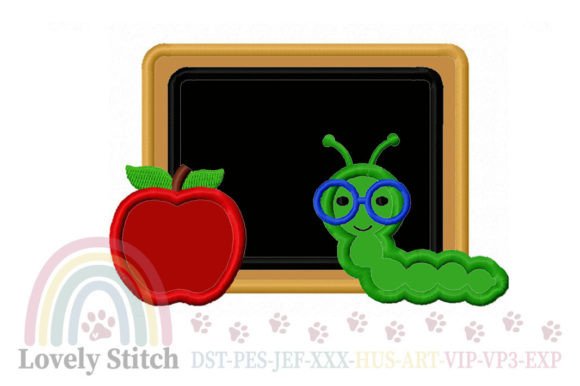
In real-world use, Apple Worm Applique Embroidery excels where personality meets practicality. As an embroidered patch, it works beautifully on denim tote bags, canvas aprons, and utility vests—especially for makers’ markets or pop-up shops. Its appliqué nature means bold shape definition and fabric texture contrast, giving depth that flat stitch-only designs often lack. On staff uniforms (think café aprons or boutique blazers), it reads clearly at chest or sleeve placement without overwhelming. For cap embroidery, it holds up well on structured front panels when sized appropriately—its organic outline avoids the rigidity that can clash with curved surfaces. As a tote bag design or apron embroidery accent, it reinforces brand identity through subtle storytelling: knowledge, growth, care, and playfulness all in one motif.
For Etsy sellers and handmade brands, Apple Worm Applique Embroidery strengthens visual consistency across product lines—whether stitched onto organic cotton tea towels, embroidered on seed packet labels, or applied as a custom patch on reusable produce bags. It also translates smoothly into printable mockups for client presentations or online listings, letting buyers imagine how it elevates their custom apparel or retail packaging. Because it’s an appliqué pattern—not just a fill-stitch graphic—it encourages thoughtful material pairing: think linen scraps for rustic charm or felt for tactile appeal, reinforcing the handmade product narrative your customers value.
Use With Care: Practical Limits for Commercial Embroidery
That said, not every application is equal—and smart small business merch starts with knowing where to pause. Apple Worm Applique Embroidery should be used carefully on small patch sizes (under 2 inches wide), where fine worm details or apple stem definition may blur. Cap fronts with tight curvature demand test runs: appliqué edges can lift if not secured with proper underlay or stabilizer. Avoid placing it directly over heavy fabric texture like bouclé or thick corduroy without extra backing—appliqué relies on clean surface adhesion. On dark uniforms or black totes, confirm thread color contrast: light apple green or cream appliqué fabric must pop against deep backgrounds. Also, watch stitch density in the worm’s body—if the file includes dense satin borders or intricate internal stitching, it may increase run time and wear risk on high-wash items like staff aprons.
How It Shapes Brand Identity and Customer Trust
Consistency builds trust—and Apple Worm Applique Embroidery delivers consistent tone across touchpoints. Unlike generic clipart-style icons, its handmade character signals intentionality. When customers see it on a bakery’s linen napkin or a children’s studio’s tote, they subconsciously register care, attention to detail, and human-scale production. That perception lifts perceived product value and supports premium pricing. It also boosts buyer engagement: playful yet grounded, it sparks conversation (“Is that a worm *in* the apple—or *on* it?”) without sacrificing professionalism. For schools, co-ops, or after-school programs, it subtly communicates learning-as-discovery—a quiet reinforcement of mission. And because it fits naturally within Back To School branding while remaining evergreen, it avoids seasonal obsolescence—making it a smart long-term design asset.
Essential Embroidery Designer Notes Before Production
Before launching Apple Worm Applique Embroidery into your next commercial embroidery project, run these checks:
- Test it in black and white first—to assess shape legibility and contrast without color distraction.
- Check scalability—does it hold integrity at 1.75” for cap fronts or 3.5” for tote bag corners?
- Review thread color options—match appliqué fabric tones to your brand palette; avoid low-contrast combos on dark garments.
- Inspect spacing—ensure worm curves and apple contours don’t crowd each other at reduced sizes.
- Confirm hoop size compatibility—appliqué often requires larger hoops than standard lettering; verify fit before digitizing adjustments.
- Test on real fabric—run samples on your go-to denim, twill, or canvas to gauge puckering and edge stability.
- Use proper stabilizer—cut-away or medium-weight tear-away works best for appliqué on unstable weaves.
- Create a client mockup—show how it lives on actual garment types before final approval.
- Compare beside other design assets—does it harmonize with your existing logo, typography, or secondary icons?
- Confirm commercial licensing—since this is a digital embroidery file, ensure usage rights cover resale, branded patches, and small business merch distribution.
Remember: the description states this is an appliqué pattern “that can be applied using various favorite fabrics as desired”—so flexibility is built in. But that freedom demands forethought. Always request the full specs—file formats, recommended stitch count range, and any known limitations—from your supplier before bulk production.
A Thoughtful Tool for Meaningful Branding
Apple Worm Applique Embroidery isn’t just another machine embroidery design. It’s a bridge between educational charm and artisanal credibility—perfect for businesses that sell experience, not just products. Whether you’re embroidering staff caps for a neighborhood bookstore, designing limited-run patches for a botanical studio, or adding signature flair to handmade soap packaging, this piece carries weight without heaviness. Used intentionally, it becomes part of your story—not just decoration, but declaration.