Bunny Ears S to Z: A Business-Ready Embroidery Font
First Impression: Playful, Personal, and Professionally Approachable
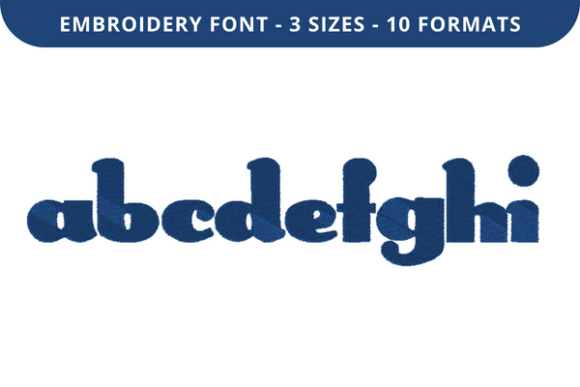
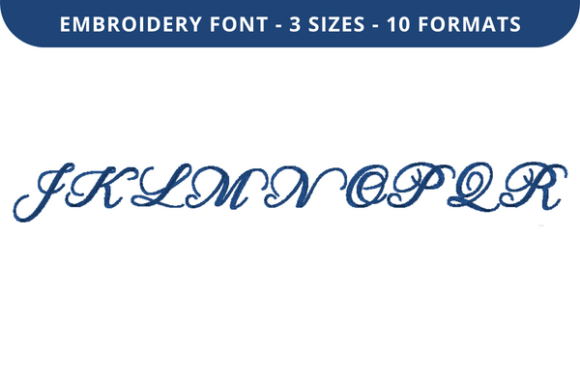
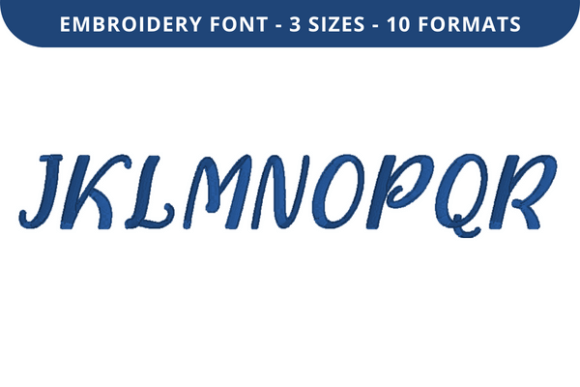
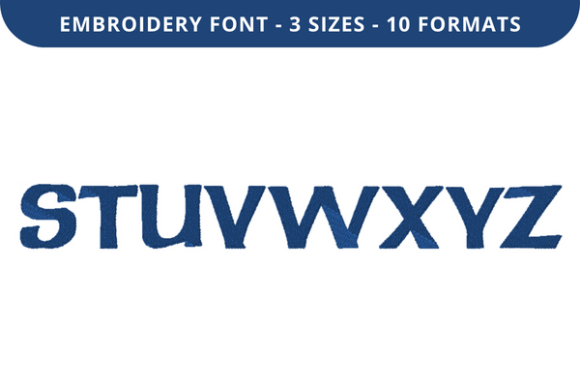
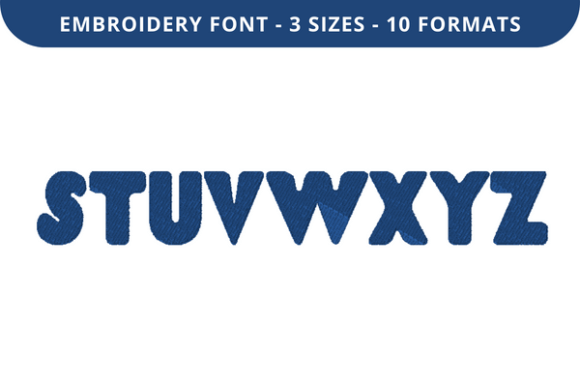
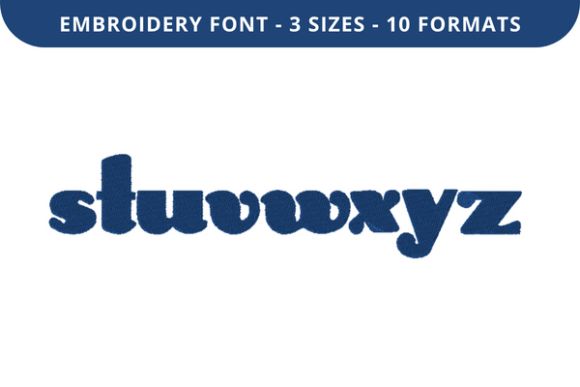
As an embroidery designer who’s digitized over 2,000 commercial projects for small businesses—from neighborhood bakeries to indie florists—I opened Bunny Ears S to Z expecting charm. What I found was more valuable: a machine embroidery design that balances personality with precision. The name hints at lightheartedness—soft curves, rounded terminals, subtle ear-like flourishes—but the description confirms its functional core: “a high-quality embroidery font to write names, dates, or quotes on any fabric.” That tells me this isn’t just decorative; it’s built for legibility, scalability, and real-world wear. For small business merch, that duality is gold: friendly enough for a pet brand’s tote bag, polished enough for a boutique’s staff apron.
Where Bunny Ears S to Z Shines in Commercial Use
This embroidery file excels where small businesses need consistency *and* character—especially in Back To School season, when teachers, camps, and creative studios seek custom apparel that feels warm but not unprofessional. Here’s how it performs across key applications:
- Embroidered patches: At 2–3 inches wide, the letterforms hold clean edges without excessive stitch density. Ideal for sew-on or iron-on patches on denim jackets, backpacks, or shop signage.
- Staff uniforms & aprons: On cotton twill or poly-cotton blends, Bunny Ears S to Z reads clearly at chest or pocket placement—even after repeated laundering—thanks to balanced letter spacing and open counters.
- Cap embroidery: When centered on structured caps (front panel), the font’s moderate height-to-width ratio avoids distortion. Avoid stretching it across curved bill fronts; use it best on flat crown areas or as a subtle side accent.
- Tote bag design & product packaging accents: Its soft rhythm complements handmade product labels, coffee sleeves, or gift tags—adding warmth without sacrificing readability from arm’s length.
- Etsy branding & craft business assets: Paired with a simple monogram or icon, Bunny Ears S to Z creates cohesive digital embroidery file bundles. Buyers recognize it instantly across listings, printable mockups, and physical goods.
Where to Use Bunny Ears S to Z Thoughtfully
Not every surface is equal—and this font’s charm depends on context. As a designer, I advise caution in these scenarios:
- Small patch sizes under 1.5 inches: Fine details (like delicate ear loops or tight serifs) may blur. Always test at final size—not just on screen.
- Curved or uneven surfaces: Cap bills, sleeve cuffs, or knit fabric stretch can pull letter spacing. Stabilizer choice becomes critical; cutaway works better than tear-away here.
- Tiny lettering below 0.3 inches tall: This embroidery file wasn’t designed for micro-text. Prioritize clarity over cuteness—reserve it for primary branding, not fine print.
- Dark uniforms or textured fabric: Thread color contrast matters. Test black thread on navy twill—or cream on charcoal fleece—to ensure legibility under store lighting or daylight.
- High-wear items like work shirts or aprons: Confirm stitch density supports durability. Overly dense fills trap moisture and wear faster; Bunny Ears S to Z’s balanced fill patterns help mitigate this—if digitized cleanly.
How Bunny Ears S to Z Strengthens Brand Identity
For small businesses, typography isn’t just about letters—it’s about tone. Bunny Ears S to Z signals approachability without sacrificing polish. A local florist using it on canvas totes says “thoughtful, hand-picked, joyful.” A children’s studio applying it to embroidered caps says “creative, nurturing, intentional.” That consistency builds recognition fast—especially when paired with complementary design assets like icons or color palettes. Customers subconsciously trust brands that present unified, well-executed visuals. And because this machine embroidery design invites personalization (names, dates, quotes), it deepens engagement: a café’s “Barista of the Month” badge feels special, not generic. That perceived value lifts perceived product value—whether it’s a $28 apron or a $12 tote.
Practical Designer Notes Before You Stitch
Before sending Bunny Ears S to Z to production—or offering it to your clients—run these checks:
- Test in black and white first: Eliminate color bias. Does spacing hold? Do curves read smoothly?
- Verify small patch viability: Resize to your smallest intended application (e.g., 1.75″ wide) and inspect stitch paths in your embroidery software.
- Review thread color contrast: Print a swatch on fabric scraps. Lighting changes everything—test under both natural and retail LED light.
- Inspect kerning and spacing: Especially between “S” and “T”, or “Z” and punctuation. Tight spacing risks thread nesting; loose spacing weakens cohesion.
- Confirm hoop size compatibility: Does the full alphabet fit your standard hoop? If not, plan for multi-hooping or split layouts early.
- Test on real fabric: Run a sample on the exact material you’ll use—linen, canvas, twill, or performance knit. Fabric texture directly affects stitch definition.
- Use proper stabilizer: Medium-weight cutaway for stability on stretchy or thin fabrics; tear-away for stable wovens.
- Create a printable mockup: Clients approve visuals—not files. Show Bunny Ears S to Z on a realistic tote or cap render before stitching begins.
- Compare beside other design assets: Does it harmonize with your logo, icons, or existing fonts? Consistency builds trust faster than novelty.
- Confirm commercial licensing: Since this is intended for small business merch and embroidered patch production, verify the digital embroidery file includes rights for resale, client work, and branded product use.
Final Thought: Personality with Purpose
Bunny Ears S to Z isn’t just another cute font—it’s a strategic tool. In a market crowded with generic script fonts and over-digitized block letters, it delivers warmth *and* wearability. Whether you’re embroidering for a Back To School pop-up, launching handmade product lines, or building a recognizable Etsy brand, this embroidery file bridges the gap between handmade presentation and professional execution. Use it intentionally, test it rigorously, and let its quiet confidence do the talking—for your business, your clients, and your finished product.