Cheerful Book: A Craft Fair-Ready Embroidery Design
First Impression: Bright, Friendly, and Instantly Recognizable
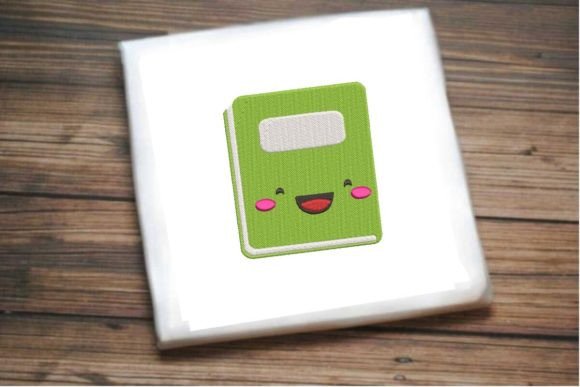
As an embroidery designer who’s prepped over 200 craft fair booths, my gut reaction to Cheerful Book is immediate: it’s bold without being loud, cute without leaning into cutesy overload, and refreshingly modern with a warm, approachable charm. The phrase “radiant smile and charming details” tells me this isn’t just a flat icon—it’s a character-driven machine embroidery design built for emotional connection. In a crowded handmade market where buyers scroll fast and touch products slower, Cheerful Book lands as joyful, confident, and school-year-ready—perfect for the Back To School season without shouting “pencils and rulers.” It feels like the friendliest shelf in your local indie bookstore, translated into thread.
Where Cheerful Book Shines on Craft Fair Products
This design thrives where personality meets practicality. On a natural canvas tote bag? It pops beautifully at 4–5 inches wide—large enough to read from three feet away, small enough to leave room for brand stitching or a subtle tagline. As an apron embroidery piece? Centered above the pocket or stitched cleanly on the bib, it adds whimsy without compromising function. For tea towel embroidery, Cheerful Book works best on smooth, tightly woven cotton—its smile reads clearly even after repeated washing, and its shape holds up against kitchen steam and splashes.
As an embroidered patch? Excellent candidate. Its clean outer contour and balanced internal detail mean it’ll hold crisp edges when heat-applied or sewn on denim jackets, backpacks, or kids’ lunchboxes. On fabric pouches and small pillow covers (especially 12" x 12" linen or cotton-linen blends), Cheerful Book becomes a giftable focal point—ideal for back-to-school bundles or teacher appreciation kits. And on caps? Use caution: the smile curve and eye details may distort on highly curved surfaces unless digitized with cap-specific underlay and reduced density—always test first.
What Makes It Sell—And What Makes It Stick
Cheerful Book has strong booth presence. It draws eyes quickly—not because it’s flashy, but because it’s emotionally legible. At a glance, customers understand it: *a book that’s happy to be held*. That resonance translates directly to engagement: parents pause, teachers smile, students point. It also elevates perceived value. A plain canvas tote becomes a “Cheerful Book tote”—a small-shop product with story, not just utility. For Etsy sellers, that narrative fuels listings, printable mockups, and repeat buyer trust. When styled consistently across your line (e.g., same thread palette on totes, patches, and tea towels), it builds brand consistency without rigid uniformity.
Production Reality Check: Smart Stitching, Smarter Decisions
This is where experience matters. Cheerful Book likely includes moderate stitch density—enough to define the smile and expressive eyes, but not so dense it balloons on textured towels or buckles on thick twill. Still, treat every file like a new client: test the design on scrap fabric matching your final product (e.g., unbleached muslin for tea towels, structured duck canvas for totes). Check thread contrast—a bright yellow smile on navy fabric reads differently than on oatmeal linen. Review spacing between elements: tight loops in the mouth or tiny eyelashes can merge if scaled too small. Confirm hoop size before cutting production runs—some versions may require a 5x7", others fit comfortably in 4x4".
Crucially: inspect stitch density in the smile arc and book spine. Over-stitched curves risk puckering; under-stitched ones lose definition. Use the right stabilizer: light cutaway for stable wovens, tear-away for tea towels, and adhesive+tear-away combo for curved or stretchy caps. And always create at least one real mockup—not just a digital preview. See how the smile holds up after laundering, how the thread catches light in booth lighting, and whether the proportions feel balanced on your chosen product scale.
Careful-Use Notes for Real-World Production
- Dense stitch areas: Smile curvature and inner eye details may compress on heavy fabrics—reduce density by 5–10% if testing shows stiffness.
- Tiny details: Avoid scaling below 3 inches wide; eyelashes and book spine lines risk disappearing on textured towels or dark fabric.
- Curved cap surfaces: Digitizing adjustments are non-negotiable—don’t assume a flat embroidery file will translate cleanly.
- Fabric texture: Highly napped or terry cloth absorbs detail—reserve Cheerful Book for smooth or medium-weave substrates.
- Dark fabric: Opt for high-contrast thread (e.g., white or buttercream on charcoal) and verify visibility in natural light—not just screen previews.
Final Verdict: A High-Return, Low-Risk Embroidery File
Cheerful Book is more than a machine embroidery design—it’s a versatile, emotionally intelligent asset for creative entrepreneurs. It photographs well for Etsy listings and social thumbnails, scales reliably across product types, and maintains handmade quality without demanding artisan-level patience. It’s repeatable for batch production, yet distinctive enough to stand out in a sea of generic florals and fonts. For craft fair sellers, it’s booth bait. For boutique makers, it’s story fuel. For digital embroidery file sellers, it’s evergreen appeal with seasonal lift.
Before you load it into your embroidery machine: compare fabric colors side-by-side, confirm commercial licensing (especially if selling finished products), and audit your design assets—is this version optimized for your most popular product? With thoughtful execution, Cheerful Book won’t just fill space on your table—it’ll start conversations, spark smiles, and turn browsers into buyers. That’s not just good embroidery. That’s smart small-shop strategy.